Click Here to View This Page on Production Frontend
Click Here to Export Node Content
Click Here to View Printer-Friendly Version (Raw Backend)
Note: front-end display has links to styled print versions.
Content Node ID: 394076
Annual spending in the global aircraft maintenance, repair, and overhaul (MRO) industry is projected to grow to more than $100 billion by 2025, according to data compiled by statista.com. Engine MRO is the industry leader, with a projected increase to $46.8 billion, while component and line MRO markets are projected to expand to $19.2 billion and $17.8 billion, respectively.
With growth in the global MRO industry comes the challenge of meeting the increasing demand for services despite a looming skilled-labor shortage. Innovative MRO shops are using advances in materials technologies, diagnostics, data storage and retrieval, and inspection and repair processes to more efficiently deliver high-quality services to customers.
Printing Parts and Prototypes
One of the hottest trends in parts prototyping and production is the use of additive manufacturing (AM). Commonly referred to as 3D printing, AM uses machines with inkjet-like heads to continuously add extremely thin layers of liquid binder to a polymer powder to form the finished 3D object.
AM now encompasses a wide range of technologies and materials, including metal alloys. For example, Lockheed Martin uses laser powder bed fusion AM to bond layers of powdered aluminum into parts used on military communications satellites. Airbus has installed an electron beam AM system that can produce parts from titanium, tantalum, tungsten, stainless steel, and other materials. Boeing has begun working with suppliers to create titanium alloy parts for its 787 Dreamliner using AM methodologies.
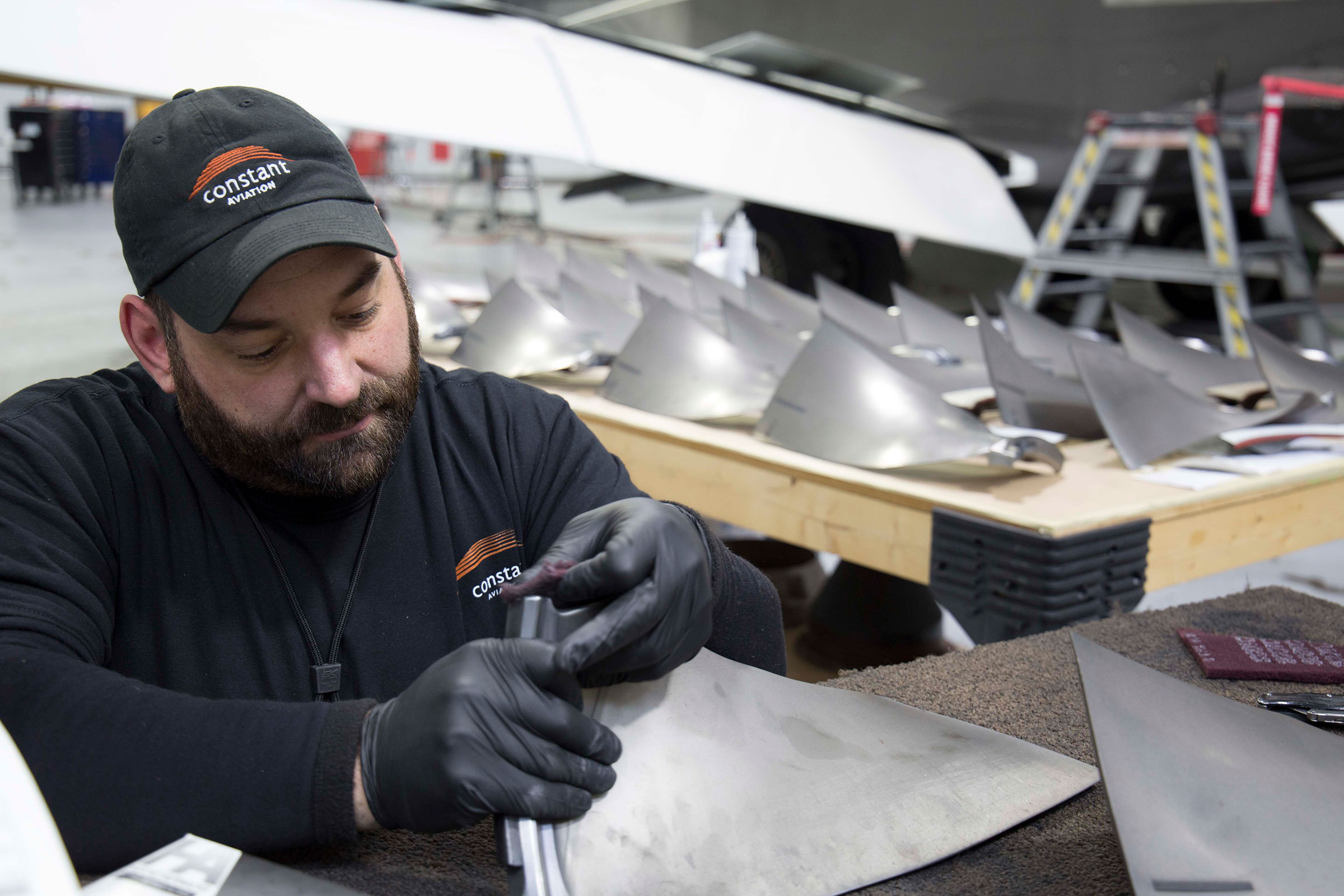
Fortunately, rapid advancements in technology have allowed prices of the AM equipment to fall, and in just a few years the new-generation technology has leaped from giants like GE, Lockheed Martin, and Boeing to smaller MROs like Cleveland-based Constant Aviation. While emerging technologies and training new technicians are both critical to the continued growth of all levels of MRO capabilities, when it comes to the typical business and general aviation aircraft (B&GA) owner/operator, getting the job done is a given.
Along with providing quality maintenance, one emerging goal at Signature TECHNICAir is to become the source for all of its customers’ FBO and operational needs, according to Dean Obr, vice president of operations for the BBA Aviation company, a division of Signature Flight Support.
“I think our customers appreciate the convenience of a one-stop shop and the BBA brand,” he said. “We have over 200 FBO locations worldwide and we have Signature TECHNICAir maintenance capabilities at 18 of those facilities. Our long-term goal is to grow that [maintenance] footprint significantly by adding maintenance facilities and increasing our number of mobile service units [MSUs].”
Obr explained that top-notch personalized support is what Signature/BBA customers expect, no matter where in the world they are.
“The Signature TECHNICAir MSUs provide primarily AOG support service to our customer‘s aircraft,” he said. “If they have an issue at a remote location, we dispatch the closest MSU to get that customer back in the air as quickly as possible. Our customers find this very beneficial.”
While it may seem easy to equip a truck and put it out on the road, Obr said that there’s a lot more to ensuring that Signature TECHNICAir’s mobile units not only provide the right technical support but do it in a way that’s consistent with the BBA brand. BBA Signature Flight Support customers expect the highest level of service, whether it’s fuel or maintenance, and that expectation doesn’t change just because they’re at a remote airport.
“The technicians who man our MSU trucks have to be more than great technicians,” Obr said. “They have to understand multiple aircraft types, they have to be highly experienced in troubleshooting airframes and avionics, and they have to have great customer-service skills. The CSR aspect is extremely important to us. These technicians are the face of Signature Flight Support to our customers.”
Obr added that because of Signature TECHNICAir’s high level of experience, the MSU vehicles are equipped to handle most maintenance tasks.
“The goal is to get the customer back in the air safely and quickly,” he said. “Customers appreciate that. In fact, they often think of our technicians as ‘their’ mechanics. That level of trust helps set BBA Signature TECHNICAir apart from other MROs for sure, and our customers really appreciate it.”
“Using 3D printing, we can save significantly in terms of setup time and prototyping,” said Stephen Maiden, president and CEO of Constant Aviation, a privately owned MRO network with five fixed locations and 22 mobile AOG (Aircraft on Ground) locations. Maiden explained that the company uses AM methods for both engineering and part production. “Ninety percent of our printed parts are for first article and R&D [research and development]. But we have certified plastic replacement parts that are flying on airplanes.”
Constant Aviation owns several AM machines that produce relatively small “printed” polymer parts, including panels and latching structures, which are used in the company’s custom aircraft interiors. In addition, Constant 3D “prints” external parts, such as antennas and antenna shims.
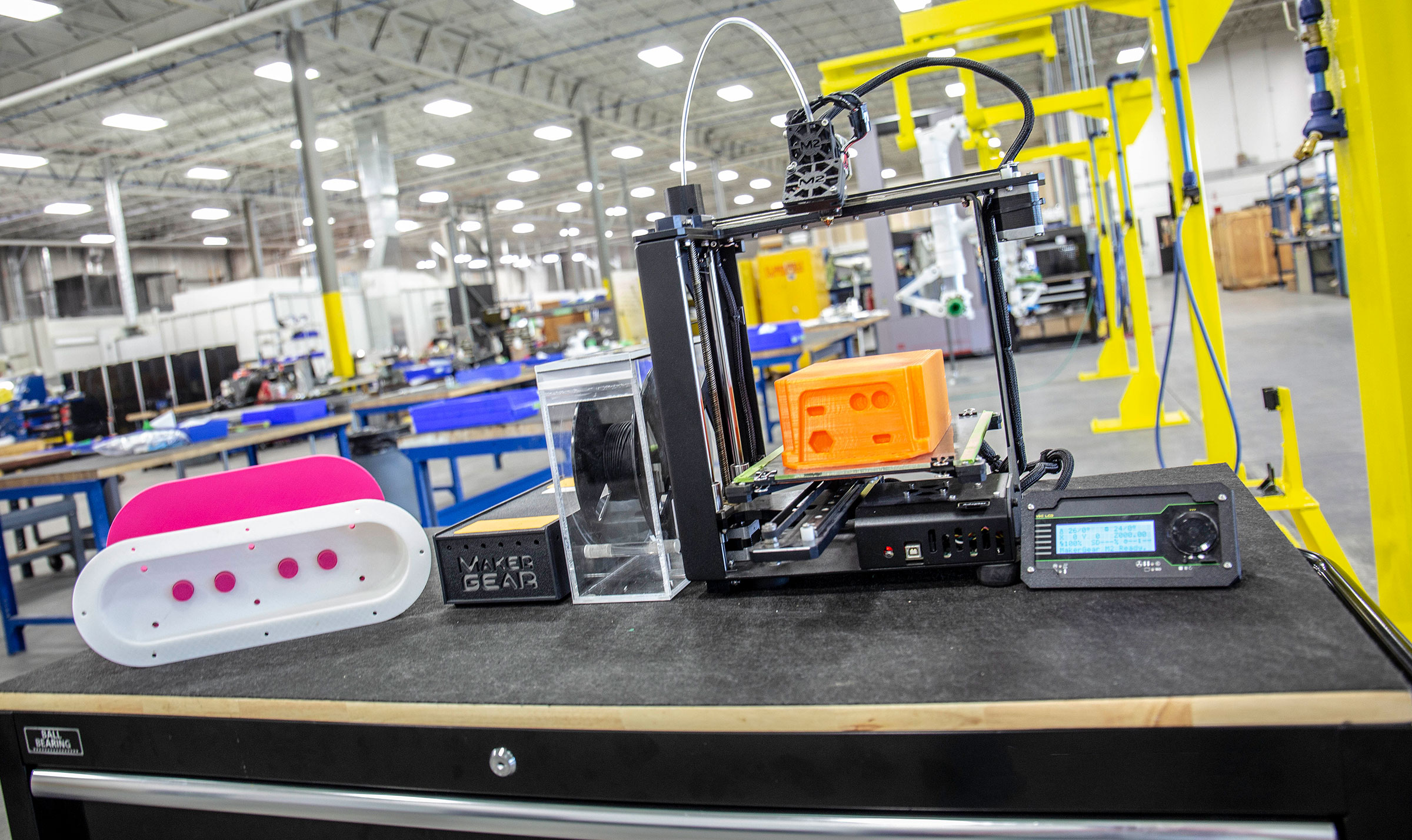
“Now we can print a part that would typically take weeks or even months to set up,” said Maiden. “For example, a complex tube may have to be formed in two different molds and then assembled together and sealed. But now we can print the part as one solid tube.”
Additive manufacturing also reduces inventory cost and increases part availability, according to Maiden.
“You no longer need to set up and run a thousand parts through the injection mold. You can just print one,” he said. “We’ll get to a point where, when an aircraft goes AOG or a part is needed, a component manufacturer will—for a fee—release the drawing to the [MRO] company to print the part instead of ordering and waiting for the part to be shipped.
For Maiden, inventory control is a key component of running an MRO network efficiently, especially one that provides nearly every aspect of MRO available: routine and AOG maintenance, avionics, interiors, structures, composites, nondestructive testing, paint, and more.
“We absolutely run as a network,” said Maiden. “It is one inventory system that connects to each location. We can push and pull inventory throughout the network. We have proprietary data-collection software that helps us manage the business in real time.”
Maiden says that while his company’s proprietary software has the capability of allowing technicians to use technology like smartphones and tablets to digitally sign off work orders, it’s a practice that just hasn’t caught on.
“We are still using computer systems on our hangar floor to connect to our work-order system,” Maiden said. “I think sometimes there’s a rush to jump onto a new technology or solution, but you have to make sure it’s practical for your business. If a mechanic is in an engine or has a grease gun in his hand, is operating with gloves on a tablet practical? Not every technology advancement is an improvement to your business.
A Place for Augmented Reality in MRO
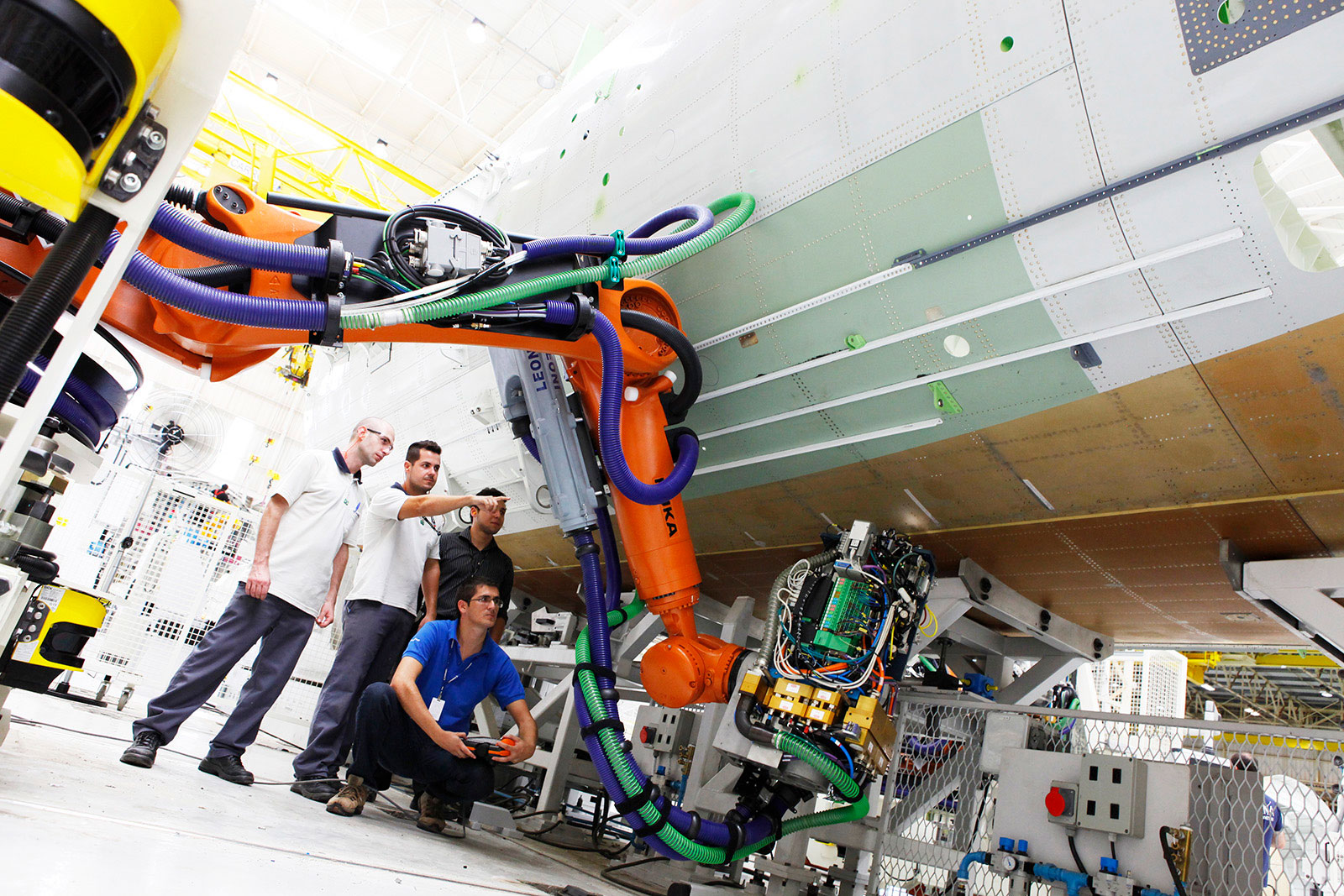
Engineering teams at Embraer’s Melbourne, Florida, facility are using augmented reality to assist in the design of aircraft, according to Frank Stevens, vice president of the company’s Global MRO Centers division.
“Engineers are able to load an airplane into the system and then put the [augmented reality] gloves and headset on and they are essentially in the airplane,” Stevens said. “They can open up compartments and move seats around to make sure that what they design on paper will work in the aircraft.”
Best known for its Legacy and Phenom lines of executive aircraft, the Brazilian manufacturer also maintains a network of MRO centers in the U.S., Europe, and South America. Stevens said that currently the Embraer-owned facilities each operate on different maintenance and inventory software platforms, but part of his job is to find new technologies and platforms to gain efficiencies and commonalities throughout the network.
“We’re exploring technologies that are going to take us down the path of paperless maintenance using technology such as RFID [radio-frequency identification] and or barcoding to increase efficiencies—getting airplanes out quicker while maintaining the highest standards without compromise of safety, quality, and reliability,” said Stevens.
“Imagine that a mechanic has an RFID tag on his uniform, the aircraft and its components are RFID tagged, and the paperwork is bar coded. When the mechanic goes out to an airplane to change a component, the system will know where the mechanic is, which aircraft he/she is on, and what components they are changing,” he explained. “The system already knows the aircraft and its work package. The RFID system links the mechanic with the aircraft and associated work orders. He still needs to identify which task he’s clocking into using a tablet, but once that’s done, the system can follow him through the work package, including parts removed, exchanged, repaired, or installed.”
Stevens said Embraer is still at the exploratory stage with this type of RFID and barcoding system, but he sees the company implementing a paperless system in the near future.
While the technology offers significant benefits, one of the challenges with a paperless solution is the immense amount of data generated that needs to be organized, stored, and protected. Stevens said cybersecurity is a growing concern, especially in a global network like Embraer’s where a customer’s aircraft may undergo maintenance anywhere in the world.
“Security is paramount, and it’s difficult to secure when you have a lot of data going back and forth,” said Stevens. “You can encrypt small amounts of data quite easily. But in an MRO network, you are passing terabytes of data during a major inspection. We don’t want any of our customers’ data being released or picked up by other parties. One ounce of error data can turn into years of recovery. So the data has to be secure.
NextGen Tech Needs NextGen-Trained Techs
The first step to ensuring that emerging technologies like 3D printing and augmented reality will deliver the significant time- and cost-saving advantages promised is for MROs to have professional A&P technicians trained in their proper applications. Unfortunately, finding those technicians is getting harder, making this an issue that, sooner or later, every MRO will have to deal with.
With over 1,100 employees spread among its seven current facilities and with a new paint facility as an extension to its existing full-service MRO facility in Chattanooga, Tennessee under construction, West Star Aviation is one leading MRO that is taking the better-to-solve-the-problem-sooner approach.
“It is one of our biggest concerns,” stated West Star’s cofounder and executive v-p for sales and marketing, Jim Swehla. “The average age of A&P mechanics is close to 51. The concern is that as an industry, we don’t have younger talent coming into the marketplace to fill the need. And it’s only going to get worse.”
One approach that West Star Aviation is taking is to become much more proactive in telling high school students and guidance counselors just how fulfilling a career as an aircraft technician can be, especially for those who are technically oriented. “It’s something we’ve recently started. We need to get ahead of the curve and get younger talent to want to go to an A&P school,” Swehla said. “Most of the kids I talk to don’t even realize that there’s a category of airplane out there for business aviation. When they think about airplanes, they think airliners or Cessna 172s.
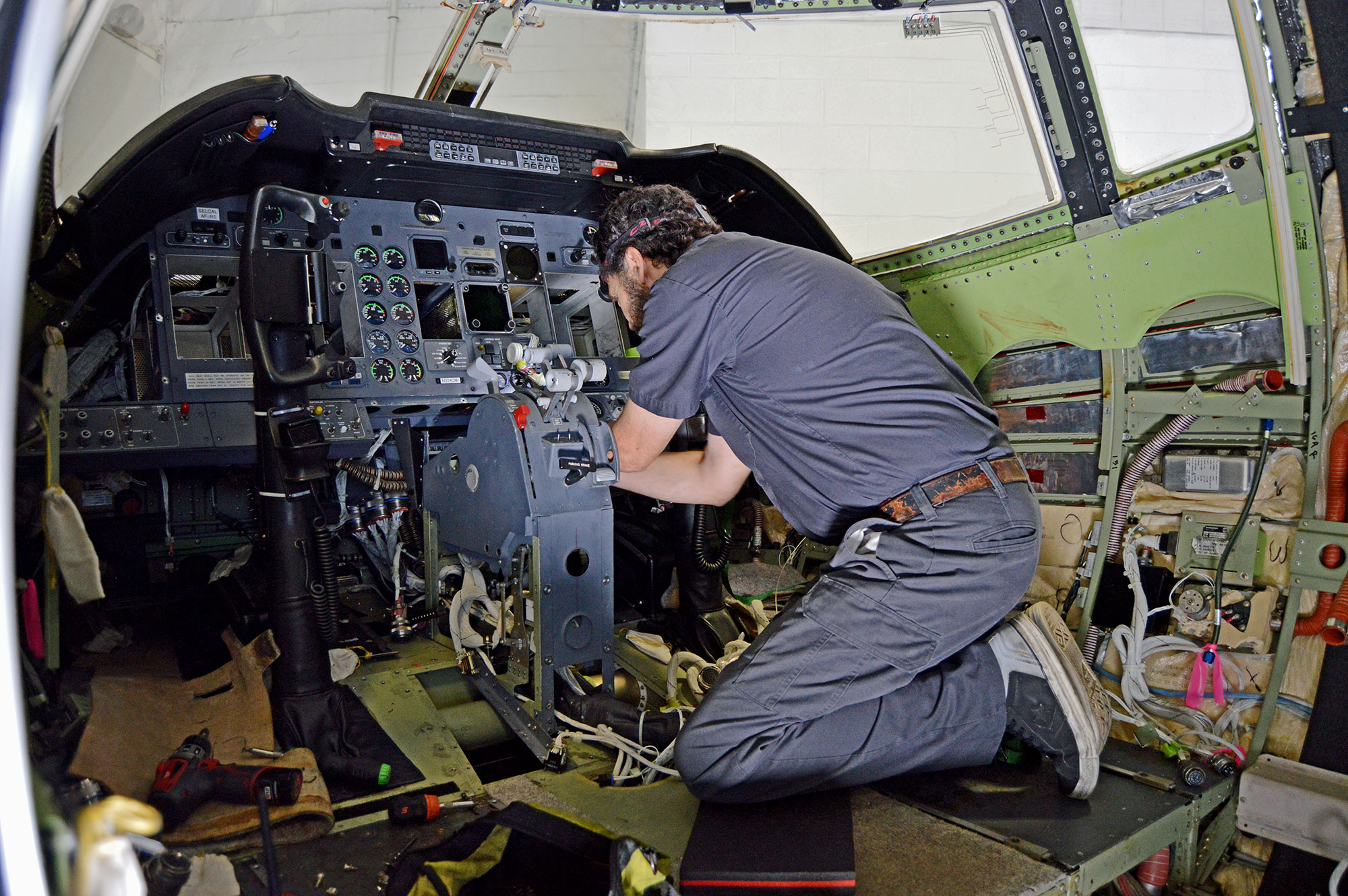
“To me, corporate aviation is the most interesting part of our business,” he added. “In our business, no two airplanes or projects are the same, especially when you get into interiors, paint, and avionics. It’s all custom. That’s what really makes it interesting and fun.”
Swehla explained that while West Star Aviation’s primary focus is attracting new talent to provide its core MRO services, the company also has a growing need for technicians who can be trained to do the very specialized work required in its dedicated landing gear and accessory overhaul shop. In addition, the company recently acquired Dallas-based Dallas Aeronautical Services, which specializes in highly technical repairs and overhauls of composite and metal airframe components, including thrust-reversers, leading edges, control surfaces, and cowling inlets.
“We are bringing more of these specialized services in-house to provide our customers with a wider array of services that are delivered faster and with greater reliability,” Swehla stated. “The more we can do to control the maintenance process, the better overall service we can provide our customers.”
A Local Solution toa Growing Global Need
While emerging technologies and training new technicians are both critical to the continued growth of all levels of MRO capabilities, when it comes to the typical business and general aviation aircraft (B&GA) owner/operator, getting the job done is a given.
Along with providing quality maintenance, one emerging goal at Signature TECHNICAir is to become the source for all of its customers’ FBO and operational needs, according to Dean Obr, vice president of operations for the BBA Aviation company, a division of Signature Flight Support.
“I think our customers appreciate the convenience of a one-stop shop and the BBA brand,” he said. “We have over 200 FBO locations worldwide and we have Signature TECHNICAir maintenance capabilities at 18 of those facilities. Our long-term goal is to grow that [maintenance] footprint significantly by adding maintenance facilities and increasing our number of mobile service units [MSUs].”
Obr explained that top-notch personalized support is what Signature/BBA customers expect, no matter where in the world they are. “The Signature TECHNICAir MSUs provide primarily AOG support service to our customer‘s aircraft,” he said. “If they have an issue at a remote location, we dispatch the closest MSU to get that customer back in the air as quickly as possible. Our customers find this very beneficial.”
While it may seem easy to equip a truck and put it out on the road, Obr said that there’s a lot more to ensuring that Signature TECHNICAir’s mobile units not only provide the right technical support but do it in a way that’s consistent with the BBA brand. BBA Signature Flight Support customers expect the highest level of service, whether it’s fuel or maintenance, and that expectation doesn’t change just because they’re at a remote airport.
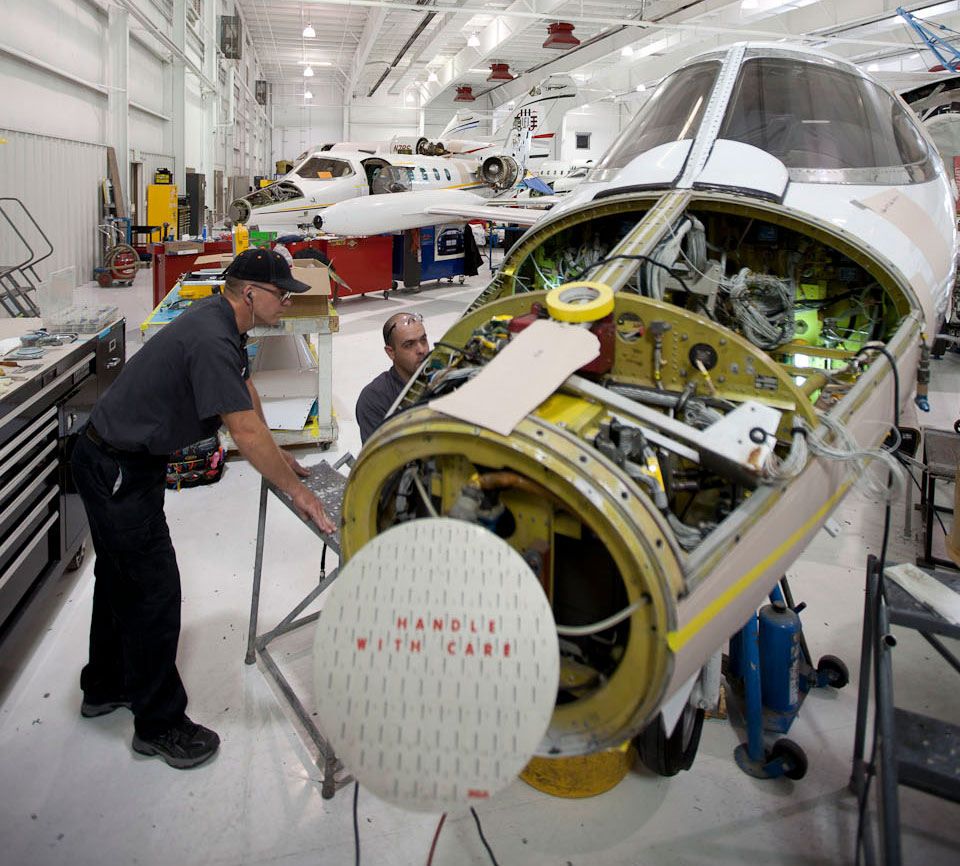
“The technicians who man our MSU trucks have to be more than great technicians,” Obr said. “They have to understand multiple aircraft types, they have to be highly experienced in troubleshooting airframes and avionics, and they have to have great customer-service skills. The CSR aspect is extremely important to us. These technicians are the face of Signature Flight Support to our customers.”
Obr added that because of Signature TECHNICAir’s high level of experience, the MSU vehicles are equipped to handle most maintenance tasks.
“The goal is to get the customer back in the air safely and quickly,” he said. “Customers appreciate that. In fact, they often think of our technicians as ‘their’ mechanics. That level of trust helps set BBA Signature TECHNICAir apart from other MROs for sure, and our customers really appreciate it.”