Click Here to View This Page on Production Frontend
Click Here to Export Node Content
Click Here to View Printer-Friendly Version (Raw Backend)
Note: front-end display has links to styled print versions.
Content Node ID: 434629
After a renter pilot made an emergency landing in Brad Smith’s Cessna Cardinal on a Southern California beach, Smith became acquainted with the harsh reality of trying to recover the undamaged airplane and get it back in the air. The reality was a mishmash of various people and companies combined with poor communication, all trying to do their part to disassemble the airplane, move it to an airport, inspect it, and return it to service. The communication aspect was a frustrating experience and led Smith to found AircraftIQ to address the information black hole resulting from the beach landing.
Smith owns a few airplanes, including the Cardinal, flies Cessna Citation Sovereign and Latitude business jets, and manages aircraft for owners. “I am a habitual airplane addict,” he admitted.
When the renter pilot landed his Cardinal on the beach, Smith was in St. George, Utah, and he immediately flew to Los Angeles in his Beechcraft Bonanza A36 and called his mechanic to ask what to do. While Smith was able to get the Cardinal’s engine running, Huntington Beach officials adamantly refused his request to fly it off the beach. So disassembly was the sole option. “I can’t officially comment as to what the cause [of the engine failure] was,” he said, “because the investigation is ongoing, and that’s not my story to tell.”
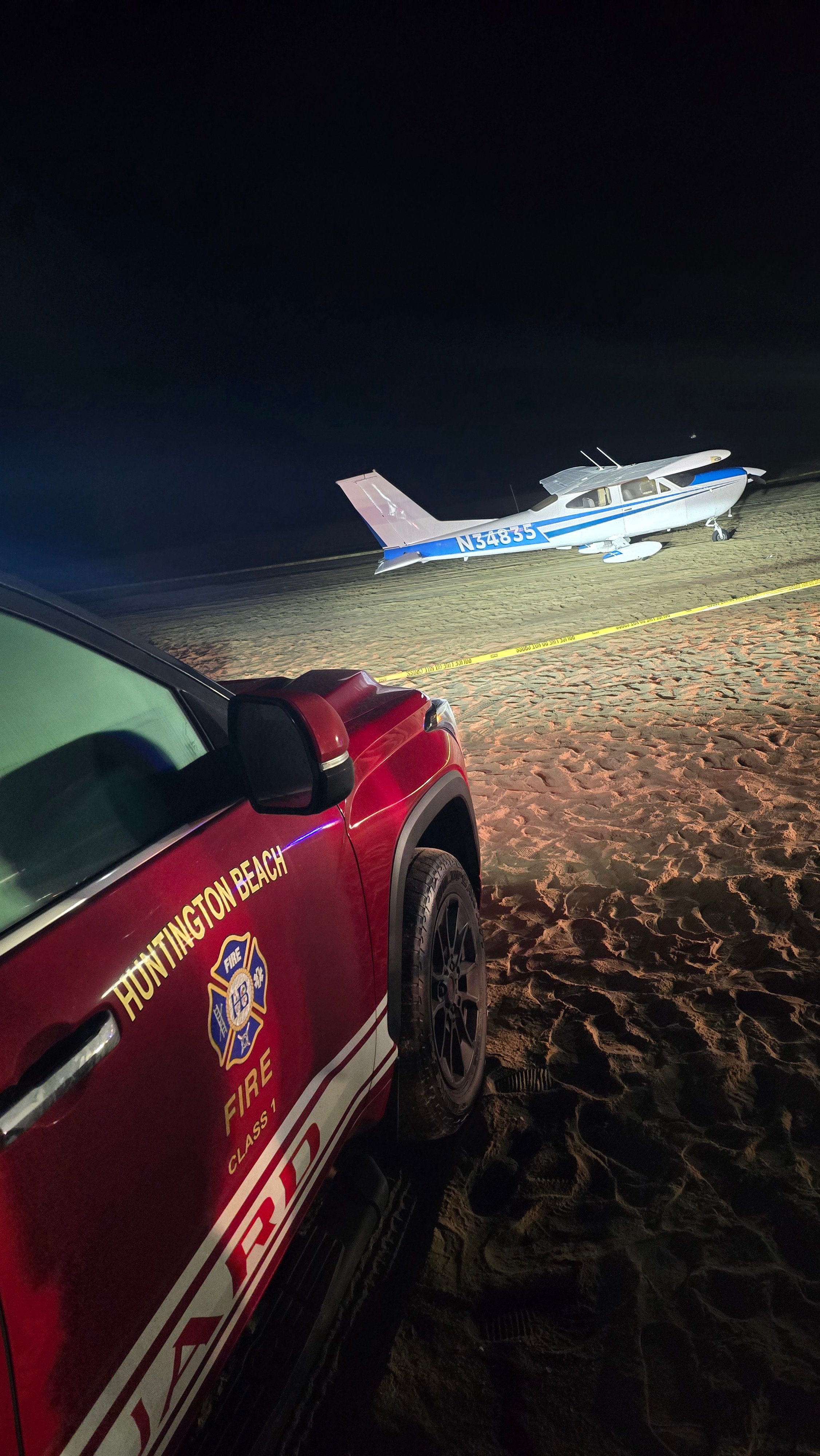
Just weeks before, a helicopter had crashed next to the beach, and the wreckage was still there. “As you can imagine, the city of Huntington Beach was a little bit gun-shy to let anything fly off the beach, given the recent optics,” Smith said. “Had it happened a month earlier, I think they probably would have let me fly it off the beach.”
Finding someone who could remove the airplane from the beach proved to be difficult. “I didn’t really know where to start, and neither did my primary maintainer,” he said. “I had never been through anything like that before.” Smith’s record-keeping system at the time consisted mostly of Excel spreadsheets, shared Apple notes, and scheduling and invoicing software, even though he was familiar with maintenance-tracking systems for jets such as Traxxall, Camp Systems, and Veryon. “Nothing of that caliber really exists in the piston world,” he said.
The situation with the Cardinal made Smith realize that there was no software that could answer the many questions that came up, from finding a qualified recovery specialist and notifying renters that their favorite airplane was grounded to hiring a maintenance shop to reassemble and inspect the airplane and return it to service. “If I had this [software that we created], I could put out a request for a quote saying, ‘All shops within 50 miles, this is the scope of the work that needs to happen,’ and send it to every shop on the platform to provide a quote or availability and start date. That would have saved at least two days’ worth of work and coordinating.”
Smith had taught serial start-up entrepreneur Bill Forelli to fly eight years ago, and since then, they had formed a strong friendship centered on aviation adventures, chronicling them on Forelli’s YouTube channel. Forelli was the subject of an AIN story about how he used desktop flight simulation to accelerate his pilot training experience.
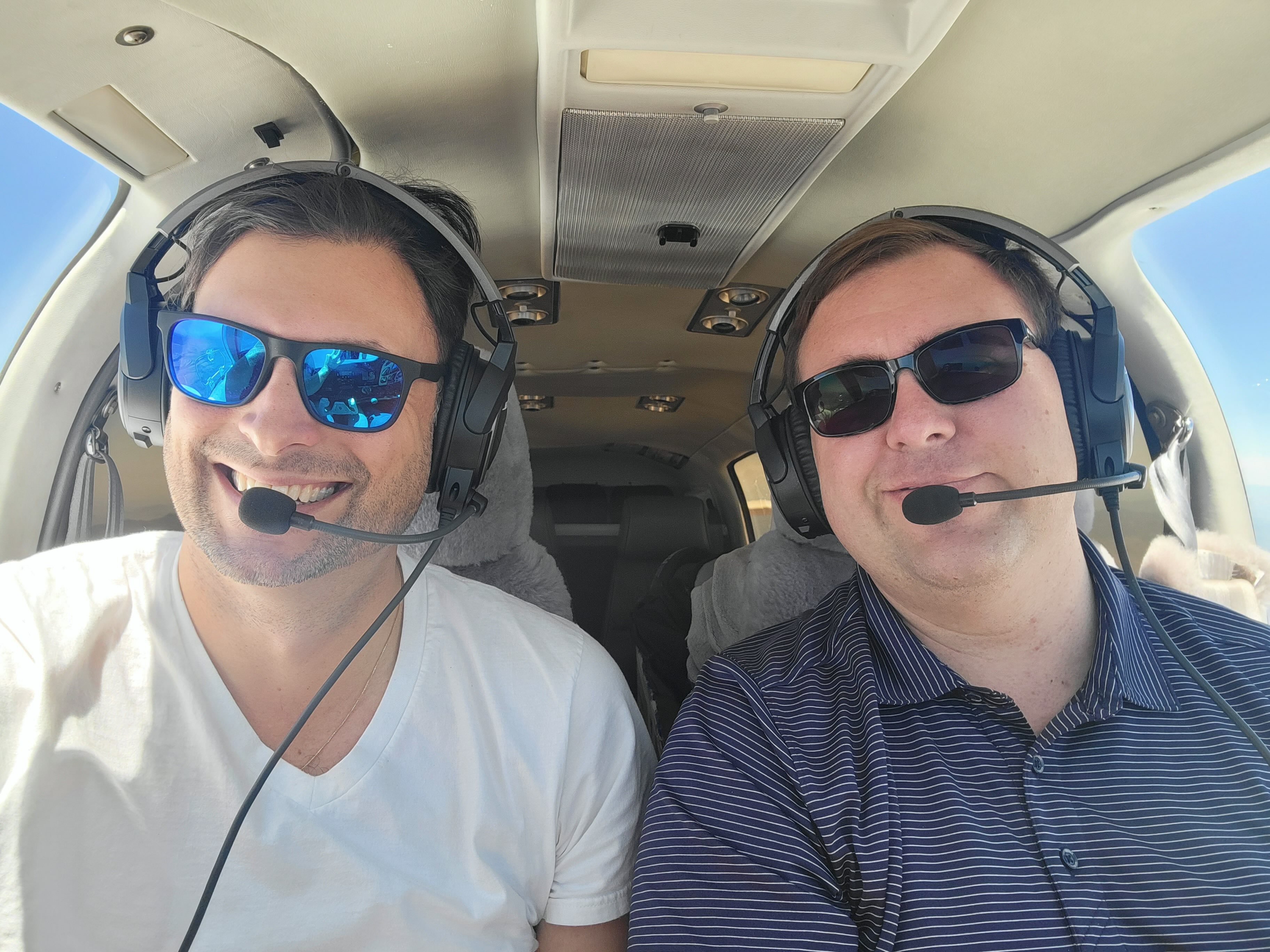
When Smith complained about the complexity of managing the Cardinal’s rescue and rehabilitation, Forelli responded that his experience with start-up technology companies could be combined with Smith’s aviation background to create a new software platform to help manage aircraft and all their complexities. Smith is well aware that there are many software solutions that claim to solve all these problems, but he doesn’t feel that they encompass all of the elements that AircraftIQ handles. “They don’t do everything, and they don’t link all the pieces together,” he said.
Essentially, not only did Smith want to be able to send a request for proposal to nearby maintenance shops that can fix a problem, but he also wanted the shop to give a quote, accept the job, fill out a digital maintenance entry, send an invoice, and get paid. At the same time, the software would notify anyone necessary (renter pilots, in the Cardinal’s case) of the airplane’s status and update the maintenance records.
While digitization of an aircraft’s logbooks isn’t a core product for AircraftIQ, Forelli and Smith made sure that it is done correctly on the platform. AircraftIQ can ingest scanned logbooks and analyze the content, but it also flags anything that it isn’t at least 95% confident about—for example, a mechanic’s signature and certificate number or other handwritten content. “The good news is that the ability to parse and scan those particular details is pretty accurate,” Forelli said. If AircraftIQ isn’t confident about the accuracy of some piece of information, it will ask the user to verify the information to ensure that it is accurate or make a correction. “If it’s not 100% accurate, if it doesn’t tell me that it’s not certain about the accuracy, and I don’t have the ability to verify it myself, I’m not going to use it,” he said.
“It might take you an hour and a half right now, but you will have 100% accuracy, so if you’re willing to spend the [time] digitizing this now, you don’t ever have to think about it or worry about it in the future,” Smith added. The benefits of digitizing logbooks aren’t just preserving the information but include the ability to look up information quickly and share it with maintainers or, someday, a potential buyer of the aircraft. A future AircraftIQ capability will be to analyze logbook information to detect trends and improve maintenance outcomes. “We’re going to be constantly working on this and adding features as technology advances,” Forelli said.
Forelli and Smith formally launched AircraftIQ in early June, following testing with 32 aircraft owners.
Key features of AircraftIQ include digitization of logbooks; discrepancy tracking and resolution; scheduling and tracking of routine maintenance and inspections; component life cycle and trend tracking; maintenance tracking, including airworthiness directives; communication tools for owners and maintainers; maintenance cost estimation, quoting, and invoicing; and partnership and flying club scheduling and time tracking.
AircraftIQ costs $25 per month for aircraft owners, and there is no charge for maintainers to use the system for digital logbook access, invoicing, and coordination with owners.