Click Here to View This Page on Production Frontend
Click Here to Export Node Content
Click Here to View Printer-Friendly Version (Raw Backend)
Note: front-end display has links to styled print versions.
Content Node ID: 434859
The U.S. Department of Transportation has broken ground on a dedicated research range for advanced air mobility aircraft at the Mike Monroney Aeronautical Center (MMAC) in Oklahoma City, home of the FAA’s main training, research, and certification campus.
Known as the Vertical Procedures and Analysis Range (V-PAR), the new development is intended to give the FAA and its partners a safe place to study how vertical-takeoff-and-landing aircraft operate—especially emerging electric and hybrid-electric designs—to help inform future operating procedures and standards.
“The V-PAR is a critical step in helping the FAA better understand how to integrate advanced air mobility aircraft safely into the National Airspace System,” said U.S. Transportation Deputy Secretary Steven Bradbury. “This facility will strengthen our ability to conduct research, train people, and support the future of aviation.”
FAA Deputy Administrator Chris Rocheleau said the range will help the agency gather the data and operational insights needed to support safe integration. “As advanced air mobility technologies continue to evolve, the FAA must ensure they meet the same high safety standards expected throughout the National Airspace System,” he said.
The roughly $8.3 million facility will sit on the west side of the MMAC campus, next to Will Rogers World Airport (KOKC). According to the FAA, the facility “brings together operational infrastructure, regulatory personnel, human factors laboratories, procedure experts, and simulation capabilities in one location.” Its initial buildout includes a touchdown-and-liftoff area, a taxiway, an aircraft apron with two parking spaces, a covered shelter, an observation and operations building, and chargers for electric aircraft.
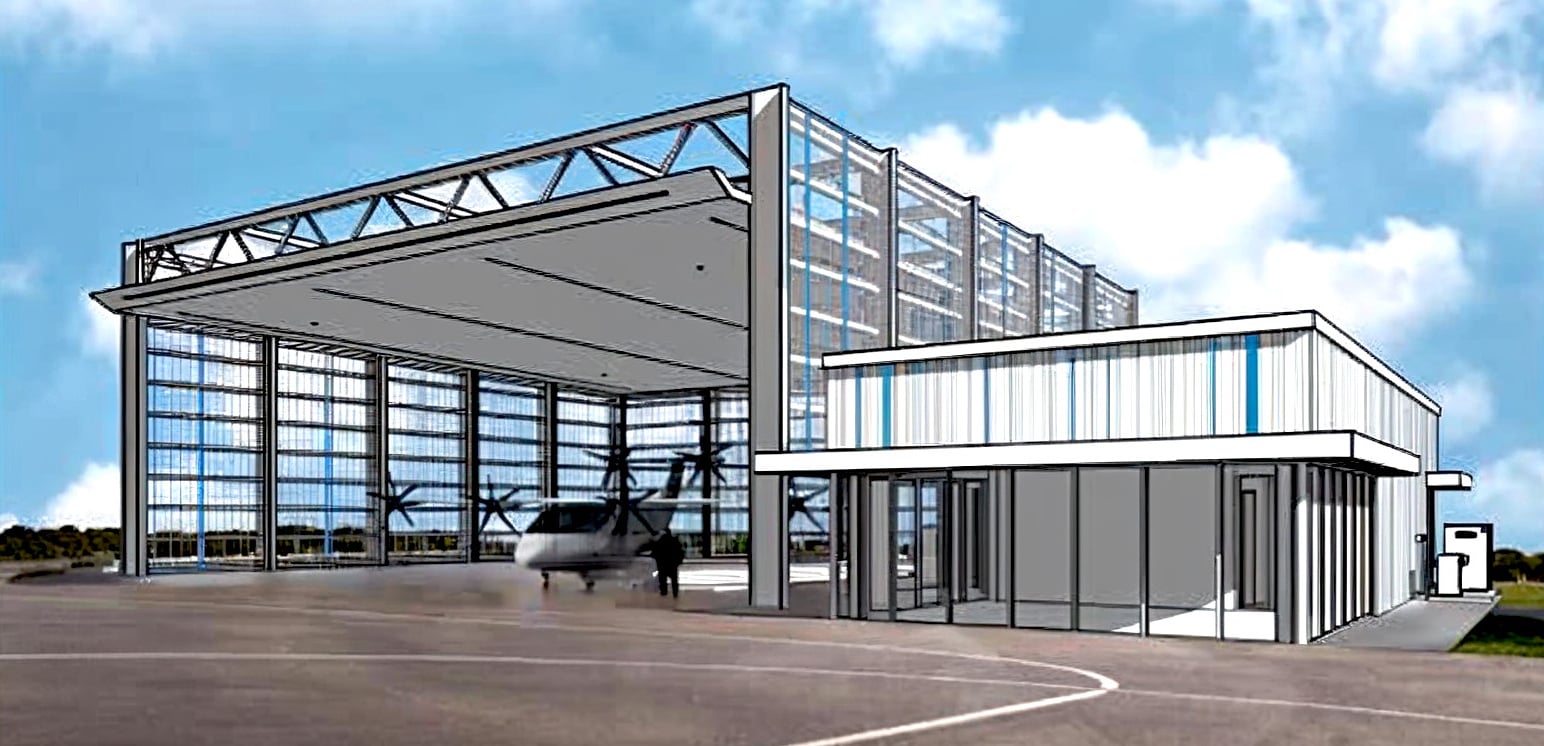
Planned research and training activities at V-PAR cover vertiport operations, arrival and departure routes, wake turbulence, downwash and outwash, radiofrequency interference, airspace procedures, and emergency planning, according to the FAA’s V-PAR fact sheet.
Concept studies began in fall 2021, and Congress appropriated an initial $6 million toward the project in 2024. The FAA awarded the design contract that summer to C.H. Guernsey, an Oklahoma City engineering and architecture firm, with vertiport expertise from Heliplanners, based in Temecula, California. Maguire O’Hara Construction, also of Oklahoma City, won the construction contract in March 2026, and the agency aims to complete the work by mid-2027. Future phases could add more landing sites, a second vertipad, expanded charging, and a short-takeoff-and-landing runway.